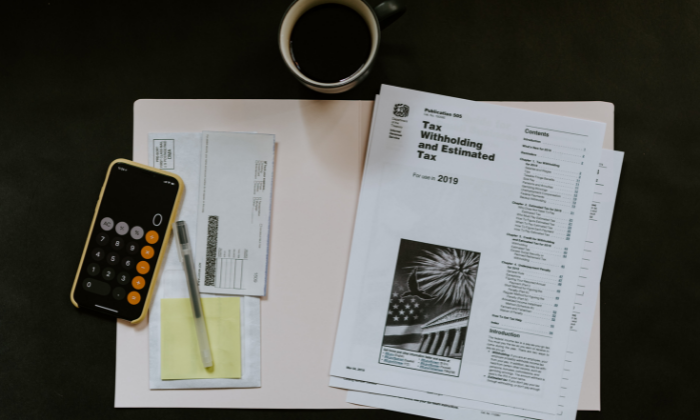
When it comes to buying a home, your primary goal might be having a place of your own to grow old and raise your family. But, there are plenty of other perks too, and a big one is the tax benefits that come with homeownership.
For many, that’s an attractive bonus, regardless of buying for yourself or as an investment property. However, you still need to keep an eye on tax rules and regulations because they can (and often do) change over time. For some benefits, that time is now.
As part of the Tax Cuts and Jobs Act (TCJA), which became law in late 2017, new regulations are now falling into place. Some will impact your tax benefits of owning a home.
Tax benefits for homeowners in 2021
Most homeowners know about the basic tax advantages of homeownership. But there are a few other benefits you might not realize you can take advantage of this year.
Residential energy credit: This credit expires at the end of 2021, but it’s a tax credit for homeowners who make energy-efficient improvements to their homes. The credit ranges from 22 to 30% of the cost of improvements.
Home office deduction: If you are self-employed and work from home, you can deduct both home office expenses and the space that’s exclusively used for your office, up to a square foot limit.
Private mortgage insurance (PMI) deduction: If you bought your home after 2006, you might be able to claim a PMI deduction if you qualify based on your adjusted gross income. It’s will expire after the 2020 tax year.
Rental expense deduction: If you have a rental or vacation home, or if you rent out a part of your residence, you may be able to claim rental expenses. Note, you’ll still owe tax on your rental income.
Tax changes homeowners need to know
There are still plenty of tax benefits for homeowners, but due to changes in the tax code, there are some differences you’ll want to know so you can best determine how to maximize your benefits.
Deducting mortgage interest
Ask any homeowner, and they’ll tell you one of the most significant tax advantages of homeownership is being able to deduct mortgage interest. While mortgage interest deduction is still available to homeowners, the amount has changed.
Now, if you bought your home after the TCJA was signed, December 17th, 2017, you can only deduce mortgage interest up to $750,000 for both single filers and married joint filers. If you bought before that date, you can still deduct mortgage interest up to $1 million for individual and married joint filers.
If you have a second home, such as an investment property or vacation home, you can deduct that mortgage interest amount, too. However, both mortgages combined must be less than the limits.
Deducting property tax
Another significant tax benefit of homeownership is deducting property taxes. In the past, if you itemize your expenses, you could deduct your property taxes. Starting in 2018, the TJCA put a cap of $10,000 in state and local property taxes combined was put in place. If you take the standard deduction, you won’t be able to deduct any property taxes.
If you live in a state with high property taxes, you’ll need to determine if itemizing or claiming the standard deduction, which did increase in 2021, is the best way to maximize your benefits.
Deducting home equity loans
Your home’s equity is the value of the part of the house that you currently own. Many people use that money to take out a home equity loan. These loans can be used for various needs, from improving your home’s curb appeal to paying off debts.
Previously, you could deduct up to $100,000 in interest on home equity loans, regardless of what you used the money for, even if it wasn’t specifically home-related. You can currently deduct the interest on the loan only if used for home upgrades, improvements, or repairs. The loan amount is now also included in the $750,000 or $1 million mortgage interest deduction limit, depending on when you purchased your home.
Now that you have a better understanding of the tax benefits for homeowners in 2021, you might decide you want to explore your options when it comes to homeownership.
If you’re thinking about buying a home, OVM is here to help, no matter the housing market conditions or changes. Get in touch today and speak with our team of loan experts. Or, if you’re ready to get started, give us a call or click here to begin your application.
When selling a house, most homeowners hope for a quick and profitable transaction that puts them in a position to make a great move. If you’re waiting for the best time to win as a seller, the market is calling your name this spring. Here are five reasons why this is the perfect time to sell your house if you’re ready.
1. There’s high demand from homebuyers.
Buyer demand is strong right now, and buyers are active in the market. ShowingTime, which tracks the average number of buyer showings on residential properties, recently announced that buyer showings are up 51.5% compared to this time last year. Daniil Cherkasskiy, Chief Analytics Officer at ShowingTime, notes:
“As anticipated, demand for real estate remains elevated and continues to be affected by low levels of inventory…On average, each home is getting 50 percent or more requests this year compared to January of last year. As we head into the busy season, it’s likely we’ll push into even more extreme territory until the supply starts catching up with demand.”
When your house is positioned to get a ton of attention from competitive buyers, you’re in the best spot possible as the seller.
2. There aren’t enough houses for sale.
Purchaser demand is so high, the market is running out of available houses for sale. Recently, realtor.com reported:
“Nationally, the inventory of homes for sale in February decreased by 48.6% over the past year, a higher rate of decline compared to the 42.6% drop in January. This amounted to 496,000 fewer homes for sale compared to February of last year.”
The National Association of Realtors (NAR) also reveals that, while home sales are skyrocketing, the inventory of existing homes for sale is continuing to drop dramatically. Houses are essentially selling as fast as they’re hitting the market – in fact, NAR reports that the average house is on the market for only 21 days.
It’s this imbalance between high buyer demand and a low supply of houses for sale that gives sellers such an advantage. A seller will always negotiate the best deal when demand is high and supply is low. That’s exactly what’s happening in the real estate market today.
3. You have a lot of leverage in today’s market.
Clearly, many more people are interested in buying than selling this spring, creating the ultimate sellers’ market. When this happens, homeowners in a position to sell have the upper hand in negotiations.
According to NAR, agents are reporting an average of 3.7 offers per house and an increase in bidding wars. As a seller, this means the ball is in your court – so much so that you can use your leverage to negotiate the best possible contract. Demand is there, and now is the perfect time to sell for the most favorable terms.
4. It’s a great way to use your home equity.
According to the latest data from CoreLogic, as of the third quarter of 2020, the average homeowner gained $17,000 in equity over the past year, and that number continues to grow as home values appreciate. Equity is a type of forced savings that grows during your time as a homeowner and can be put toward bigger goals like buying your next dream home.
Mark Fleming, Chief Economist at First American, notes:
“As homeowners gain equity in their homes, they are more likely to consider using that equity to purchase a larger or more attractive home – the wealth effect of rising equity. In today’s housing market, fast rising demand against the limited supply of homes for sale has resulted in continued house price appreciation.”
5. It’s a chance to find a home that meets your needs.
So much has changed over the past year, including what many of us need in a home. Spending extra time where we currently live is enabling many of us to re-evaluate homeownership and what we find most important in a home.
Whether it’s a house that has the features suited to working remotely, space for virtual or hybrid schooling, a home gym or theater, or something else, selling this spring gives you a chance to make a move and find the home of your dreams.
Bottom Line
Today’s housing market belongs to the sellers. If you’ve considered making a move but have been waiting for the right market conditions, your wait may be over. Give me a call at 678-744-8070, so you’ll be positioned to win when you sell your house this spring!
An old rule of thumb in real estate is to wait until the flowers start blooming to put a house on the market.
There are sound reasons behind that. Spring is the time of the year when people are getting their tax refunds, the weather is ideal for going out to look at properties, and summer break is coming up for the kids, making a move easier.
But that’s not what has happened this year: the uptick in home sales is defying normal seasonality trends.
Spurred by interest rates at record lows, home sales this fall far outpaced last year’s numbers, according to data from the National Association of Realtors showing that contract signings rose 20.2% in October over the past year.
Homes for sale are scarce, and with demand so strong, prices are high. That’s good news for sellers.
“In 2020, because we have such a low inventory, we never really had a rush for spring, and houses have been slow to come on the market,” says Miranda Biedenharn, a real estate agent with RE/MAX Alliance Realty in Dayton, Ohio.
That means you don’t need to wait for the “best” time to sell your house. If you’re thinking about selling your home, go ahead and list it, says Biedenharn.
In the current market, you can expect your home to sell fairly quickly for the asking price, possibly above, and you’re more likely to receive multiple offers.
“We have way more buyers than we have sellers at the moment,” says Carol Ann Reed, a real estate agent with Realty Group in Minnesota. “I have seen the traffic tick down a little bit in October and November, but not a lot. Right now, I would say to a seller, ‘put your house on the market,’ even with winter approaching.”
When Is the Best Time to Sell?
“Spring and summer are always hot times to sell,” Biedenharn says, but where you live and local market conditions also heavily influence the best time to list your house. Factors out of your control include local job growth, mortgage interest rates, tax incentives, and neighborhood inventory.
All in all, the ideal time to put your house on the market can be really specific to your location. For example, winter tends to be the slowest season for home sales, but if your climate is warm year-round, your window for selling may extend to off-season months.
“I’m from Minnesota, so moving in February is not a good idea. The spring is really when the market gets moving, especially in the north,” says Reed. “But it’s not the same in every market.”
That’s why it’s helpful to work with a real estate agent who’s an expert in your local area and can help market your home to potential buyers, as well as price your home competitively. Almost nine out of 10 sellers work with an agent to sell their homes, according to recent NAR data.
“There’s always motivated buyers out there, so whenever you’re ready is the best time,” says Biedenharn.
Why Covid-19 Hasn’t Tanked the Housing Market
Seasonality isn’t the only element to keep in mind when deciding when’s the right time to sell your house. It’s also important to consider the current conditions of the market.
Experts including Danielle DiMartino Booth, a former adviser to the president of the Dallas Fed, predicted a housing crash earlier this year because of the recession caused by the coronavirus pandemic and massive job losses across the nation. But the opposite happened.
U.S. home prices rose 7.8% from the third quarter of 2019 to the third quarter of 2020, the fastest year-over-year climb since 2006, according to a report from the Federal Housing Finance Agency.
The increase has been spurred by several factors. People working at home due to the pandemic, foreseeing they would not return to offices, have sought larger home-office spaces, often by moving to bigger houses. Low mortgage rates have enticed people to buy, while the inventory of homes for sale has remained low.
And this will likely be the case through 2021 as well, says Reed.
That means people looking to sell their house are going to have it good for some time if the current conditions hold. According to a 2020 National Association of Realtors study, homes sold for an average of $66,000 more than the purchase price, up from $60,000 last year.
“There are lots of buyers out there eagerly seeking a house that they haven’t been able to find one yet. At this point, sellers can sell all the way through the winter,” says Reed, “and the Federal Reserve has said they’re going to keep interest rates low, so I think the market is going to keep cooking like this for a while, at least for the next year.”
Real estate investing doesn’t come with a map, and the road to riches is often winding. That
being said, there are things you can do to put yourself on the right path and ensure your best chances for success. Listening to real estate professionals and successful investors is a great place to start.
To get you in the mindset of the pros, we gathered 23 essential real estate investing tips from people who can speak from experience. Whether you’re new to real estate investing or going on your third income property, this article is filled with great nuggets of advice and interesting perspectives. Dive in.
1. Find rental properties in emerging neighborhoods
“Rental properties represent a great way to get involved with real estate investments. Emerging
neighborhoods offer growth potential and tax incentives for buyers. Buyers that purchase
properties in emerging neighborhoods maximize profits and ensure that their income covers
their costs.”
-Ralph DiBugnara, President of Home Qualified
2. Diversify your investments
“It’s commonly preached that the best real estate investment is the one in your backyard. While
there is merit to understanding the area in which you’re investing, I believe that you’re truly
limiting your profitability potential by only considering a small geographic area.
By considering investments in other states and cities you’ll have a large pool of available
investments and ultimately better opportunities. Investing across a large geographical area also
further diversifies your investments and protects your portfolio against the volatility of local
markets.”
-Jeff Miller, real estate investor and co-founder of AE Home Group in Maryland
3. Don’t over-rehab
Corey Chappell, a Closing Options Analyst at 181 Close Now offers some great property
investment tips (which we’ve included in the next several points). He starts by explaining that
investment properties don’t need to be on par with Pottery Barn when it comes to accents and
fixtures.
“Some high-end houses have to have the nicest countertops and fixtures. Lower-end houses
need to look nice and modern but don’t need the most expensive everything. It’s OK to budget.
It’s OK to go with the middle-of-the-road fixtures.”
-Corey Chappell, Closing Options Analyst at 181 Close Now
4. Don’t over-leverage yourself
“You can be very successful for a long time and still go broke if every rental mortgage to the hilt.
If you keep some of your rentals free and clear and some of them financed then you’ll have a
good mix of safety and still stretching your resources.
Do it right, and a few longer-than-expected vacancies or dips in your cash flow doesn’t have to
be the end of your career.”
-Corey Chappell, Closing Options Analyst at 181 Close Now
5. Look into single-family rentals
“Single-family homes are your safest bet for attracting the correct tenant. Everyone would love
to live in a house. Some people just cannot afford to or do not want to own. The single-family
home historically has over the last hundred plus years always appreciated.”
-Don Wede, President of Heartland Funding Inc.
6. Do your homework before listening to paid advisors
“In many cases, your trusted and paid advisors (broker, wealth manager, tax accountant, etc.)
may suggest you avoid real estate in your portfolio altogether. They generally give the same tired
reasons that it’s ‘illiquid’ or ‘too management-intensive.’ Those can be valid arguments based on
your specific situation, but that’s not the real reason they want you to avoid real estate.
Stockbrokers don’t get paid for you to invest in real estate. There’s nothing in it for them, no
commissions, and nothing to do. That is unless they want you to purchase a high-cost,
non-traded REIT, but now you’ll know their true motivation. You need to do your own
homework to decide if the potential cash flow from real estate is right for you.”
-David B. Saxe, Calvera Partners, LLC
7. Nip maintenance issues in the bud before they get bigger
“One thing that’s helped me quite a bit is writing a bi-annual walk through into the lease
agreements. This is mainly to ask the renter if there’s anything they’re noticing that needs to get
fixed.
We’d also inspect under all the sinks and around the toilets, etc. for water damage. Finding small
water leaks before they become big problems has saved me a lot of money.”

 Facebook
 X
X
 Pinterest
 Copy Link